
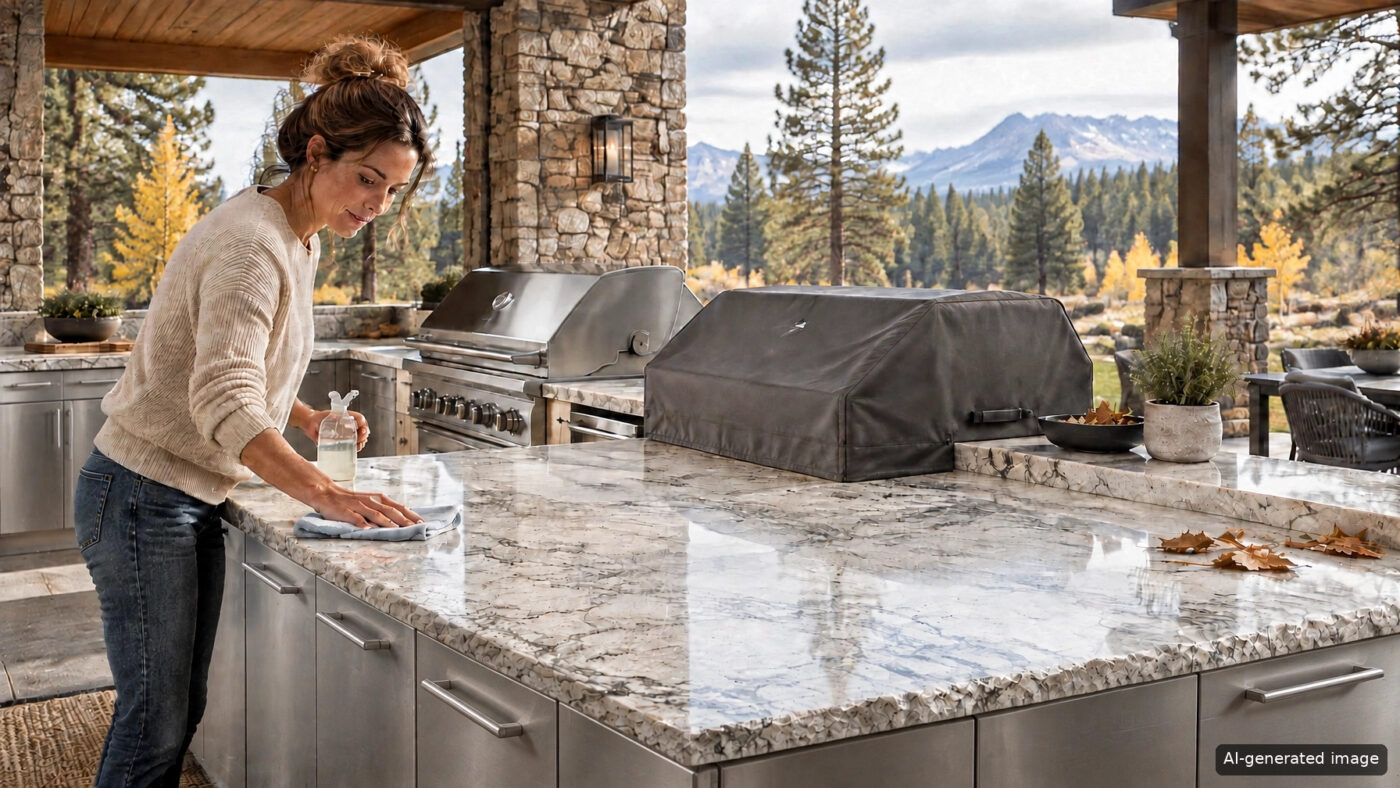
Natural Stone tops outside requires special attention and maintenance especially during winter. Besides normal threat of staining, some natural stones can chip on the surface during freeze/thaw cycle of Central Oregon Winter when exposed to moisture. Covering up the countertop from the elements is highly recommended.
A Central Oregon winter can bring snow, moisture, and repeated swings between freezing and thawing. If your outdoor kitchen or countertop stays exposed, a little preparation now can help protect the surface and plumbing, until grilling season returns.
The key is keeping water and other liquids from lingering where it can freeze or stain. Stone is only one part of the installation: seams, sink cutouts, supports, cabinets, and drainage all matter too.
Before winter: clean, inspect, and dry
Start by clearing away anything that could trap moisture or leave marks. Remove planters, mats, cushions, cutting boards, and accessories. Brush away leaves, pine needles, and other organic debris, especially around the sink, backsplash, and appliance openings.
Clean the surface with a stone-safe cleaner or warm water and mild dish soap, then dry it well. Imagine Stoneworks’ care and maintenance guide recommends avoiding acidic and abrasive cleaners, including vinegar and some all-purpose products. When in doubt, check the cleaner label and your surface manufacturer’s care instructions.
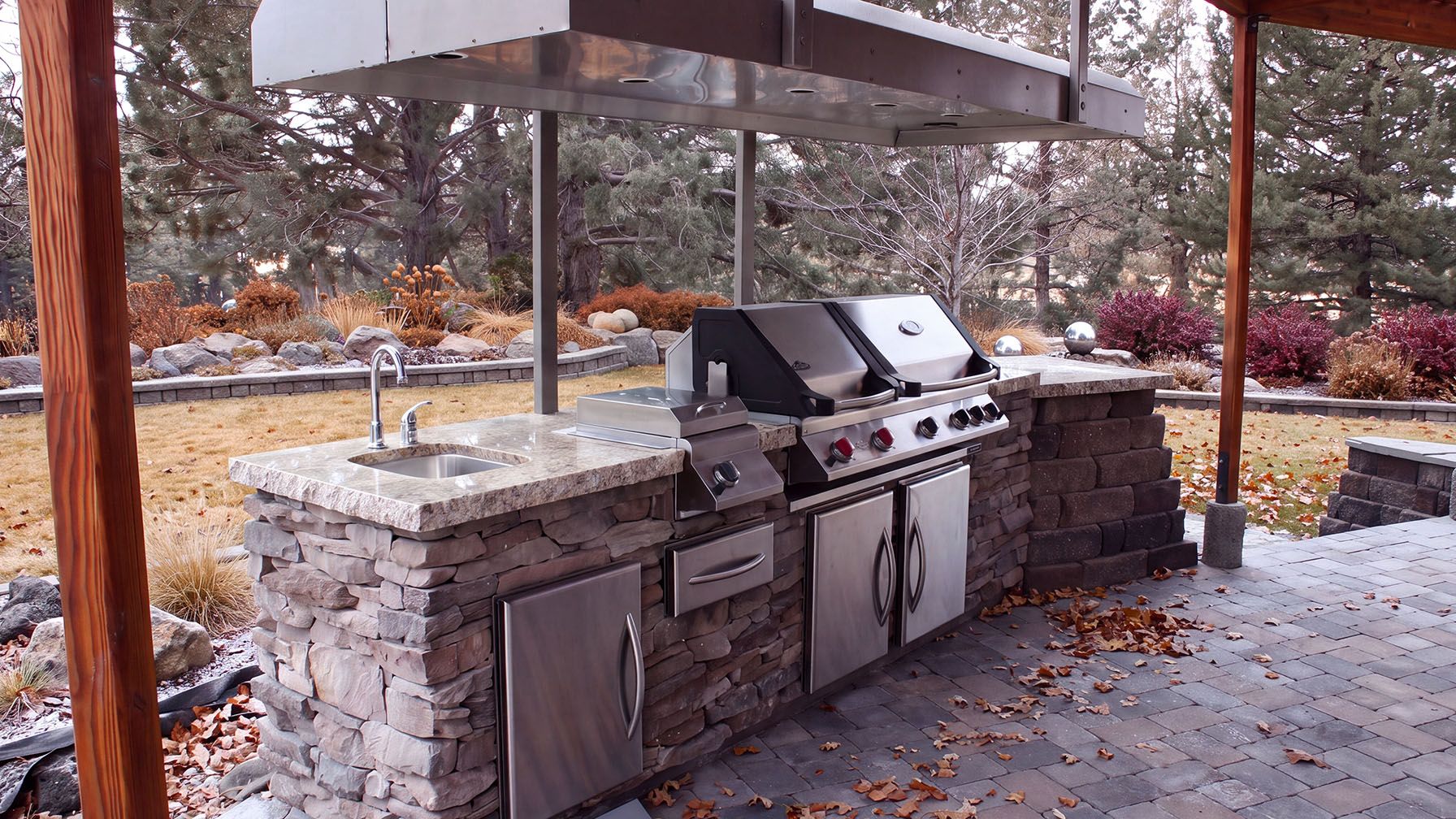
Outdoor Kitchen with Granite Countertop and 6cm Chiseled Edge. This kitchen is partially covered, but snow and rain can still blow onto the natural stone countertop.
Take a few minutes to look over the whole setup. Check the countertop, edges, seams, caulk, sink rim, and the area around grill or appliance cutouts. Look for chips, cracks, loose joints, or spots where water collects. Make sure drainage paths are open and that water can move away from the counter and cabinetry. If seam is failing, repair the seam to prevent it from getting worse. Re-calk areas that are failing to seal the areas from exposure to the elements. Imagine Stoneworks Repair Service can handle most of the repairs associated with the outdoor kitchen countertop if needed.
Small openings can let moisture in. If you spot damage or a recurring wet area, consider having it assessed before winter rather than covering it up and hoping for the best.
Drain water lines and protect the plumbing
A countertop cover won’t protect pipes from freezing. If your outdoor kitchen has a sink, faucet, refrigerator, ice maker, or other water connection, follow the appliance and plumbing instructions for shutting off and draining the system. Disconnect garden hoses and protect outdoor faucets as recommended by the City of Bend’s freeze-weather guidance.
Outdoor kitchens vary, so there isn’t one draining procedure that fits every setup. If you’re unsure how to handle a sink trap, supply line, or appliance, ask a plumber. And don’t forget to check grill and other appliance manuals for seasonal care directions.
Seal natural stone, at the right time
Natural stone can be a beautiful choice outside, but different stones absorb moisture differently. Granite and quartzite are often considered for outdoor use; the exact stone, finish, installation, and exposure all play a role.
Sealer can help slow absorption and staining. It does not make stone, seams, or the countertop assembly waterproof, and it cannot prevent every freeze-related problem. Imagine Stoneworks recommends annual sealing for natural stone as part of its general care guidance. For an outdoor counter, use a sealer approved for that particular stone and exterior application, and follow the product instructions.
Timing matters. The surface should be clean and thoroughly dry, and the sealer needs suitable temperatures and time to cure. If winter weather has already arrived, it may be better to wait for an appropriate dry spell or spring conditions than to apply sealer in cold or damp weather.
Choose a cover that lets the surface breathe
A fitted, secured outdoor cover helps keep snow, leaves, and debris off the island. Choose one intended for outdoor use that allows some airflow. A cover that holds moisture against the surface, or lets water pool on top, can work against your goal.
Avoid tightly wrapping the countertop in plastic. Trapped condensation can leave the surface damp. Check the cover during winter to make sure it hasn’t shifted, is not rubbing against sharp edges, and isn’t holding standing water.
An awning or roof offers extra protection, but wind-driven rain and snow can still reach the countertop. Keep an eye on the exposed edges and joints.
How the materials handle Central Oregon winters
No material is invulnerable. The best choice depends on the specific product and how the whole countertop is fabricated and installed. Here’s a practical overview:
- Natural stone: Some granite and quartzite are suitable for outdoor use, but natural stone varies in porosity and performance. Ask about an ideal candidate for exposed outdoor application when it comes to natural stone. Generally speaking, uniform-colored, dense, stones without a lot of natural veins or patterns are an ideal candidate. Imagine Stoneworks’ natural stone page describes the characteristics of several stone types.
- Porcelain: Porcelain slabs are often a strong option for exposed outdoor counters. Imagine Stoneworks lists porcelain as suitable for outdoor use. Confirm that the exact slab is rated for your conditions, and that the edge, support, adhesive, seams, and installation details are suitable too. For example, Dekton’s product information (pdf) describes performance characteristics for that specific surface line; always check the product details for the material you’re considering.
- Engineered quartz: Don’t assume a countertop labeled “quartz” is made for outdoor exposure. Quartz is an engineered stone that contains small amount of resin. That resin will change color under prolonged direct exposure to Sun that emits UV. Many products are intended for interior use, and warranties can exclude outdoor installations. Check the exact product’s written requirements and warranty or consult with our team. Caesarston’s warranty information is one example of why it’s important to review terms for the specific collection.
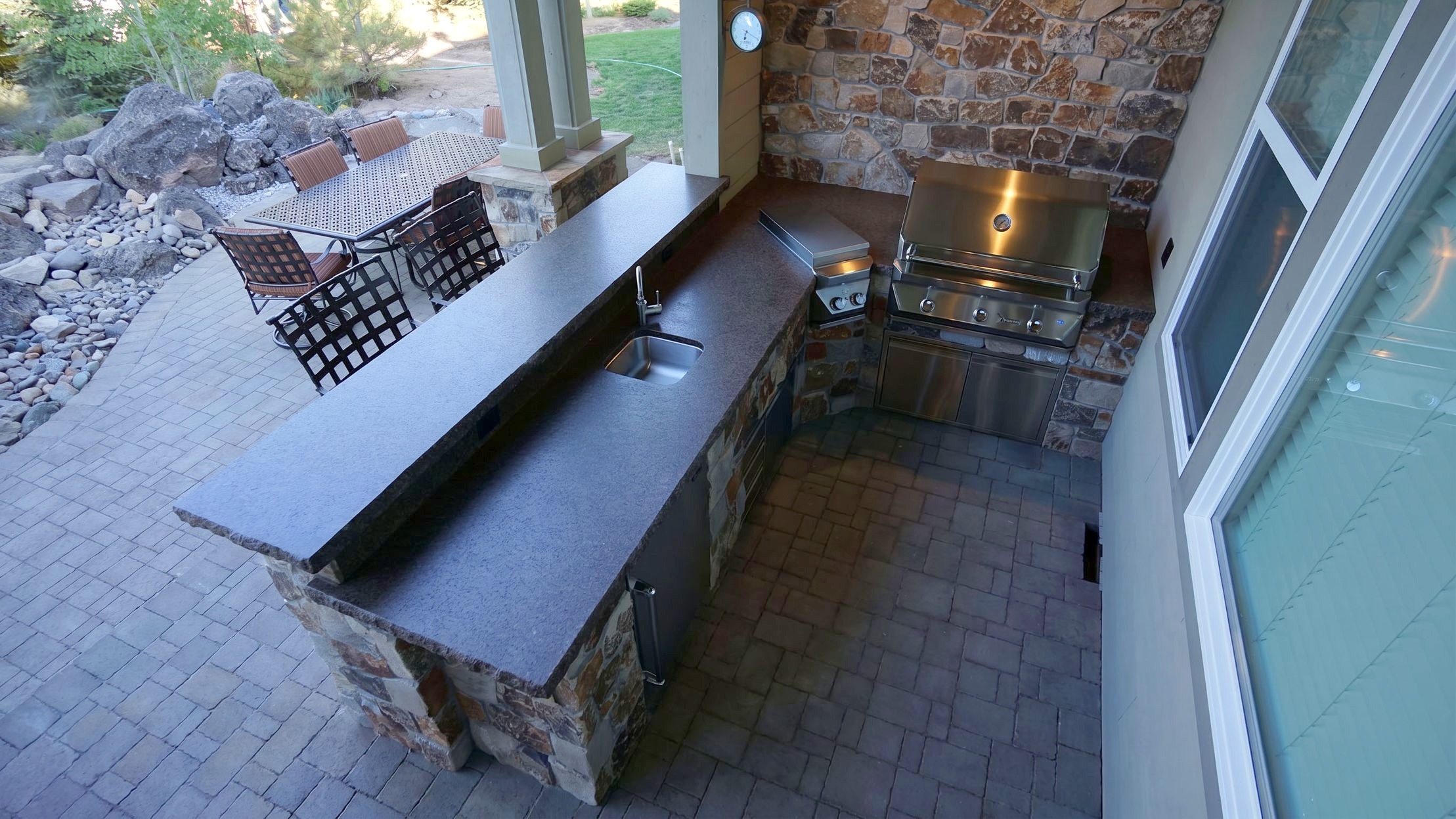
Outdoor Kitchen with 3cm Granite – These uniform pattern granites may not have “WOW” factor, but they are surprisingly durable for outdoor applications.
In general, porcelain products specifically approved for exterior use are often a practical low-maintenance choice. Some natural stones can also work well when selected and installed for the conditions. Standard interior engineered quartz deserves extra caution outdoors. The slab is only part of the answer: edges, seams, support, drainage, and manufacturer guidance matter just as much.
During winter: be gentle with snow and ice
Brush loose snow away with a soft broom. If you need to remove loose ice, use a plastic scraper carefully, never a metal tool that could scratch or chip the surface. Avoid de-icing salts and chloride ice melts on or near the countertop. Meltwater can splash onto the stone or collect in joints, and salt residue may affect the surface or nearby materials.
Don’t pour boiling or very hot water onto a frozen counter. A sudden temperature change can stress the slab. Let ice melt gradually when conditions allow, then remove standing water. If your countertop has a long overhang, avoid letting heavy snow build up on it.
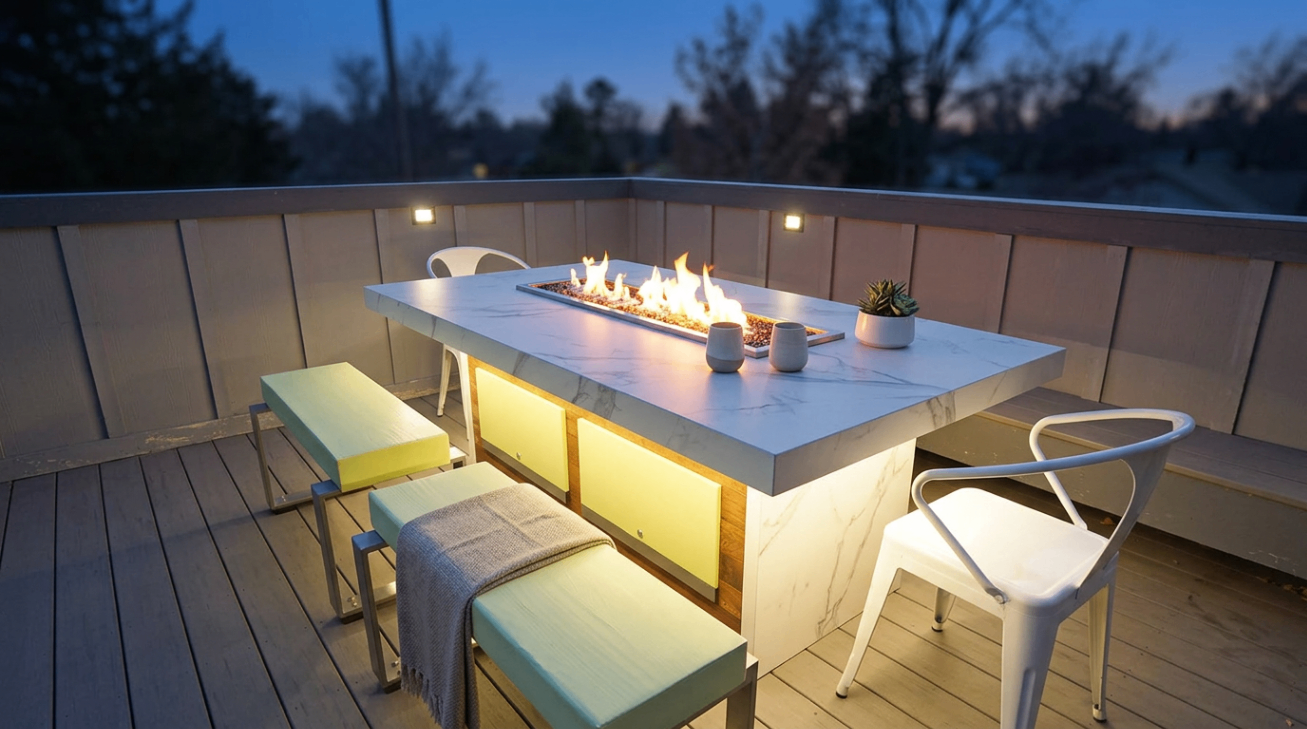
Dekton Porcelain Outdoor Table with Firepit – These Porcelain Slabs are currently the most outdoor friendly material in our opinion.
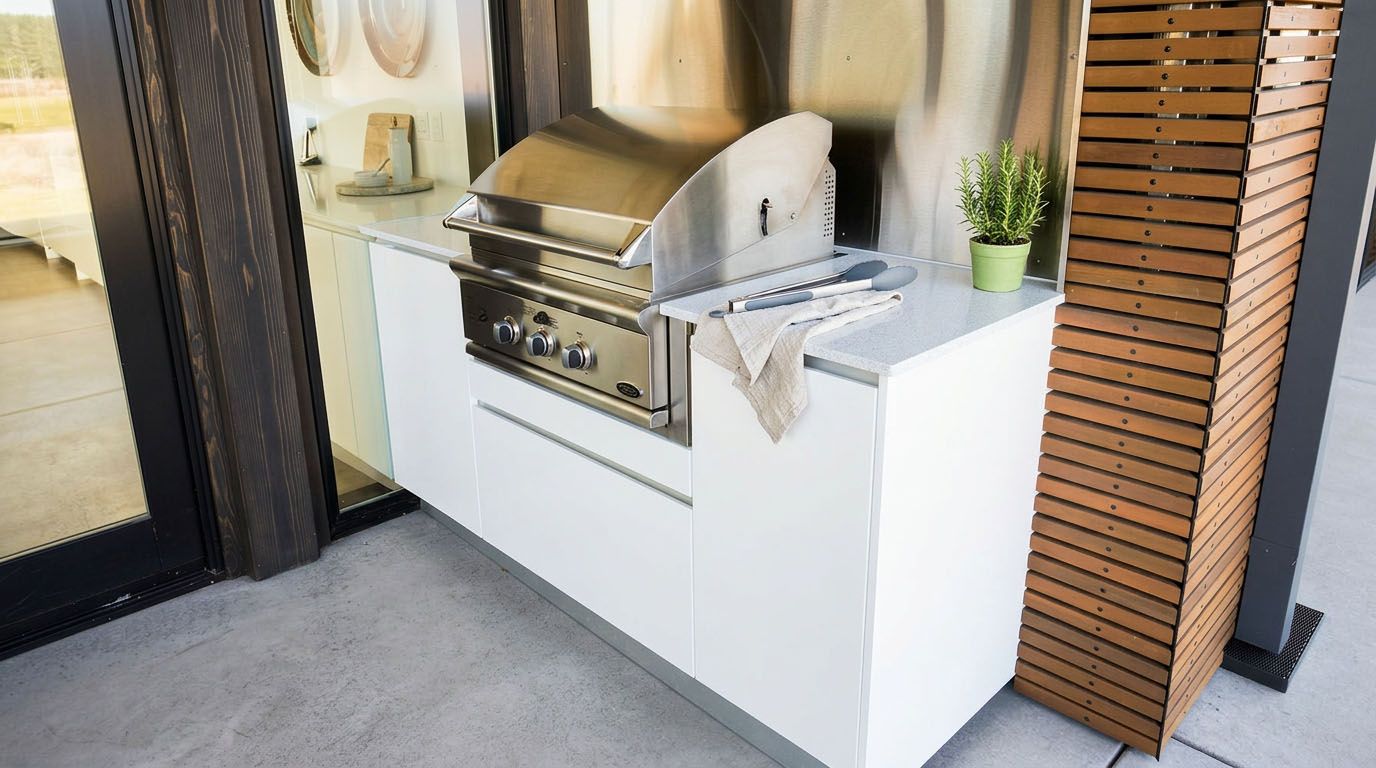
Another outdoor BBQ countertop with Porcelain slab. This ultra modern house is in Tetherow, Bend Oregon.
Check again when spring arrives
When the weather warms, remove the cover and let the surface dry. Clean off dirt and residue with a product suitable for your material, then inspect the countertop, seams, edges, sink cutout, supports, and plumbing for cracks, movement, staining, or moisture.
If winter reveals a chip, crack, failed seam, or dull or stained area, Imagine Stoneworks’ repair and restoration team can help assess the surface and discuss next steps. Avoid filling damage with household glue or caulk before you know what caused it.
And if a new outdoor kitchen is on your spring wish list, winter is a good time to start planning. Imagine Stoneworks designs, fabricates, and installs custom surfaces in Bend, Oregon. Explore the material options or request a quote to begin a conversation about your project.
A clean, dry counter. Drained plumbing. A well-fitted breathable cover. A few simple steps can help your outdoor kitchen make it through the season ready for the first warm evening outside.