
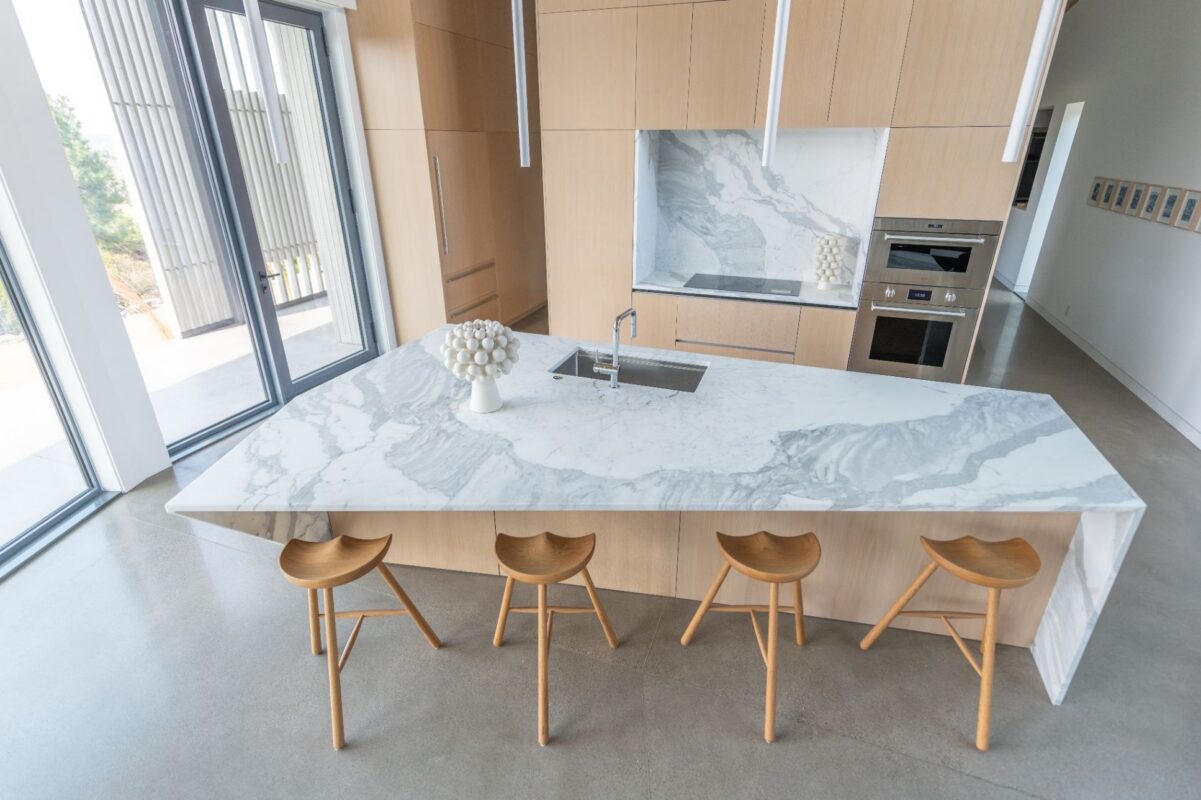
Marble brings natural veining and a one-of-a-kind feel to kitchens, bathrooms, and showers. From the design standpoint, it is one of few natural stones that withstands test of time. But if you’ve noticed a dull spot after a splash of lemon juice, or a dull mark after cleaning, you may be dealing with etching.
The good news: etched marble can often be professionally restored, and there are ways to help protect it from future damage. The right approach depends on how the surface is used and what kind of protection it needs.
What is marble etching?
Etching is a change to the stone’s surface caused by a chemical reaction. Marble contains calcite, a mineral that reacts with acids. When an acidic substance touches the surface, it can dull the polish or leave a dull mark.
Common culprits include:
- Lemon juice, vinegar, and citrus drinks
- Wine, tomatoes, and other acidic foods including pumpkins especially during Halloween.
- Some cleaning chemicals including some disinfectants
- Certain personal care products
An etched area may look like a water spot or stain, but it is not simply something sitting on top of the marble. The surface itself has been affected. Etches can appear on countertops, vanities, and shower surfaces. Anywhere marble meets acidic liquids or cleaners.
For more detail on marble’s characteristics and where it may be a good fit, see our guide to natural stone.
Etching or staining: how can you tell?
Etching and staining can look similar at first, but they are different problems. A stain is discoloration from a substance that has soaked into the stone. An etch is surface damage that often shows as a dull or lighter-looking patch, especially on polished marble. Etched spots can often be felt by running finger across the etched area especially on polished marble.
Sometimes a mark may involve both. For example, a spill can etch the surface and leave pigment behind. If you’re not sure what you’re seeing, avoid scrubbing or trying multiple cleaners. A stone-care professional can help identify the issue before treatment.
One important distinction: sealing marble helps reduce the chance of staining, but a standard penetrating sealer does not make marble acid-proof. Because etching happens at the surface, sealing alone won’t prevent it.
How to help prevent etching at home
A few easy habits can make daily care feel simple and help reduce the chance of new marks.
Choose a stone-safe cleaner
Use a cleaner made for natural stone, or follow your stone professional’s recommendation. Avoid vinegar, lemon-based products, and general-purpose or bathroom cleaners unless the label confirms they are safe for marble. Abrasive powders and scouring pads can also damage the finish.
Imagine Stoneworks shares more guidance on caring for and maintaining stone surfaces.
Wipe spills promptly
Blot spills with a soft cloth rather than spreading them across the surface. Rinse the area with clean water and dry it. Pay special attention to citrus, wine, tomato-based foods, and anything with an acidic label.
Use coasters, trays, and cutting boards
Coasters help protect a marble counter from drinks. Use a cutting board for food prep and a tray for bottles or toiletries on a vanity. In a shower, keep acidic cleaners and personal care products from sitting directly on the marble.
Don’t assume a honed finish is protected
A honed surface may make small etches less noticeable than a glossy finish, but it is still marble and can still react to acids. Finish changes how damage looks, not whether the stone can etch.

Can etched marble be repaired?
In many cases, yes. Etched marble repair usually means restoring the surface finish, not simply wiping away a mark. The right method depends on the depth and size of the damage, the stone’s finish, and whether staining or scratches are also present.
A small, shallow mark may sometimes be improved with a marble polishing product used exactly as directed. But trying to aggressively polish one spot can leave an uneven shine or a visible low area. For widespread etching, deep marks, scratches, or a finish that no longer looks consistent, professional restoration is usually the safer choice.
A stone restoration professional can assess the surface and determine whether it needs honing, polishing, or another treatment to bring the finish back into balance. If you’re unsure what caused the mark, it’s best to ask before applying a repair product.
Imagine Stoneworks’ repair and restoration team works with damaged natural stone, including etched or scratched surfaces. We’re based in Bend, Oregon, and can help Central Oregon homeowners understand the options for their marble countertops, vanities, and showers.
When is anti-etch protection worth considering?
If you love the look of natural marble but worry about everyday spills, anti-etch marble countertop protection may be worth discussing with a stone professional. It can be especially appealing for a busy kitchen island, a frequently used counter, or a vanity where products and liquids are part of the daily routine.
Imagine Stoneworks is a certified anti-etch service provider. Our team offers an anti-etch coating intended to create a protective barrier against etching and staining on soft natural stone. Depending on the project, it may be applied during fabrication or considered alongside restoration.
Anti-etch protection is different from a standard sealer, which is primarily used to help resist staining. It’s also important to discuss how the coating may affect the surface, what care it needs, and what its coverage and limitations are. No countertop care plan replaces prompt cleanup and stone-safe products, so ask questions and choose the option that fits how you use your space.
A little care goes a long way
Marble’s natural character is part of its appeal, and part of living with it. Use a stone-safe cleaner, blot spills, and keep acidic products from sitting on the surface. If marks are already there, a professional assessment can help you understand whether restoration or added protection makes sense.
Want help with etched marble repair or anti-etch marble countertop protection? Request a quote from Imagine Stoneworks. We’d be happy to talk through your marble surface and help you find a practical next step.
For additional general guidance, see the Natural Stone Institute’s stone care recommendations and information on sealing natural stone.
The Final Message
Soft, stain-prone marbles are not for everyone, and they are not usually recommended for heavily trafficked areas like kitchens unless homeowners are fully aware of the limitations of such countertops.
An ideal homeowner for natural marble is someone who does not use their countertop often and is very careful with the stone. Another ideal homeowner is one who actually appreciates the natural patina and aging process of marble; the type of customer who loves the distressed look of aged marble with some stains, etching, and scratches.
A natural marble island is not for homeowners who want to maintain a showroom-quality finish, cook a lot, and have two teenagers at home. For such customers, engineered quartz or porcelain slabs that look like marble will be the better option.