

Choosing between quartz and granite is about more than color. It’s about how you cook, how much care you want to give your counters, and how the surface will work in your home.
For many Central Oregon kitchens, quartz is a great fit if you want easy everyday care and a consistent look. Granite may be the better choice if you love natural variation, need a surface that handles heat well, or have a counter that gets strong direct sun.
Both can bring lasting beauty to your kitchen. The right one is the one that fits the way you live.
First, what do “Quartz” and “Granite” mean?
Granite is a natural stone cut from the earth. Each slab has its own pattern, color shifts, and mineral details, so the slab you choose is truly one of a kind.
Quartz countertops usually mean engineered quartz: a manufactured surface made from quartz and other materials, including resins and pigments. It offers a broad range of styles, from quiet, even colors to patterns inspired by natural stone.
One quick note: quartz and quartzite are different materials. Quartzite is a natural stone. If you’re comparing samples or browsing slabs, it’s worth confirming which one you’re looking at.
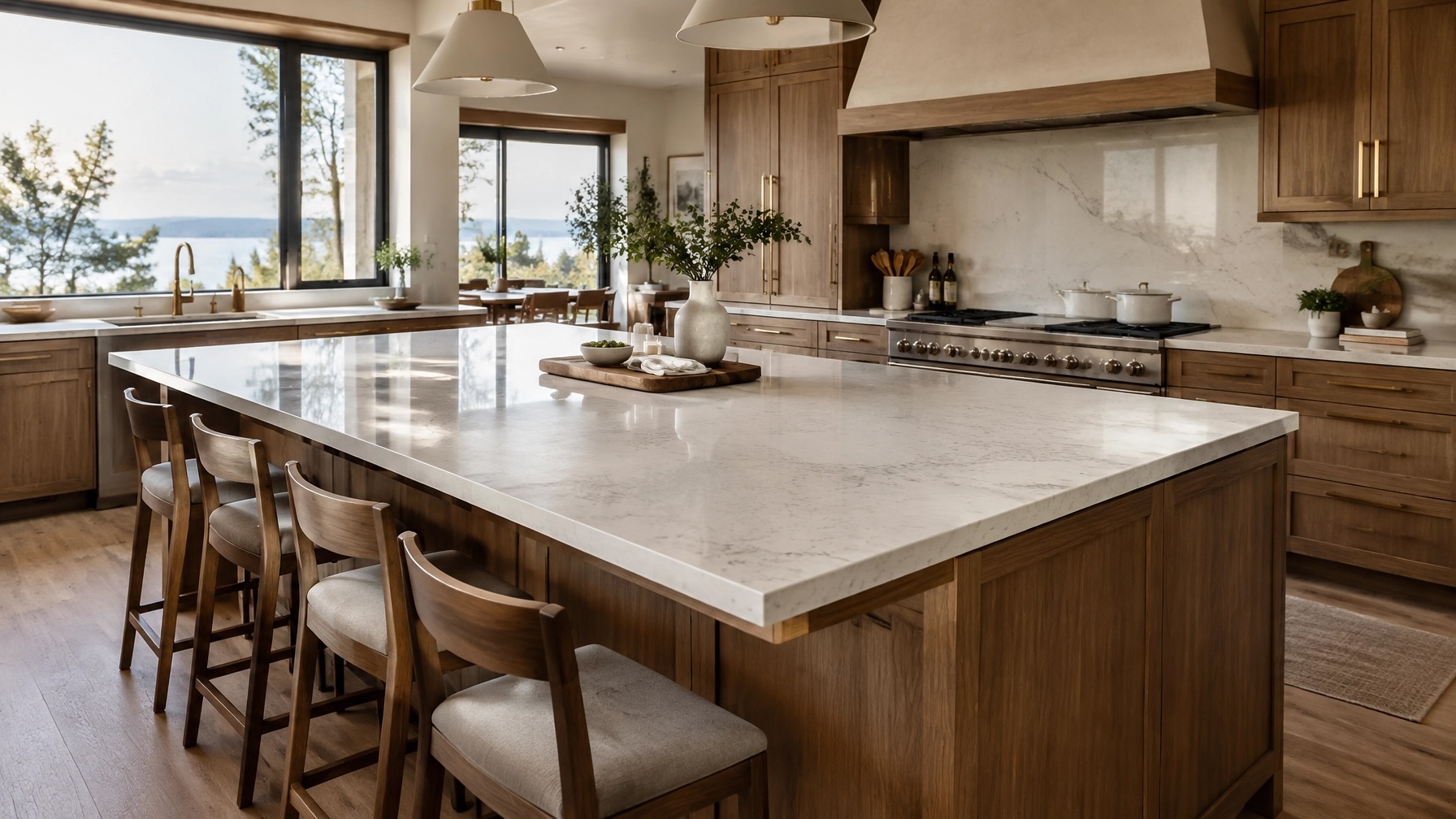
Engineered quartz offers a consistent, even pattern from edge to edge, which helps create a clean, coordinated look.
Quartz vs Granite at a glance
Feature
Engineered Quartz
Granite
Appearance
Consistent colors and patterns, with many styles available
Natural variation; every slab has its own character
Sealing
Typically does not require sealing
Imagine Stoneworks recommends sealing natural stone annually
Everyday cleanup
Simple daily care; wipe up spills
Simple daily care; wipe up spills and maintain the sealer
Heat
Use a trivet; high heat can damage the surface
Generally more heat-tolerant, but trivets are still a good idea
Strong direct sun
Ask about the specific product’s UV guidance
Often the more suitable choice for areas with direct sun
Best for
Low-maintenance indoor kitchens and a more uniform look
Natural character, heat tolerance, and sun-exposed areas
The exact care and performance can vary by slab and product. Before choosing, ask about the specific material you’re considering.
How do they handle real family life?
Everyday messes and stains
A busy kitchen sees coffee, cooking oil, sauces, and the occasional dropped berry. Engineered quartz is nonporous, so it generally resists stains without needing a sealer. That makes it an appealing option if you’d rather keep upkeep simple.
Granite is porous to varying degrees. Sealing helps slow the absorption of spills, and the right care can keep the surface looking beautiful. Imagine Stoneworks initially seals natural stone during installation and recommends resealing it annually.
With either material, it’s smart to clean spills promptly. A cutting board, coaster, and quick wipe can help protect your countertop over time.
Heat and cooking
Granite generally has the edge when it comes to heat tolerance. But no stone surface is indestructible. A sudden change in temperature can still cause damage, and heat can affect sealers or nearby seams.
Engineered quartz contains resin, which can be damaged by very hot cookware. Set down a trivet or hot pad before placing a pan, Dutch oven, or slow cooker on the counter.
For both materials, make trivets part of your kitchen routine. It’s a simple habit that helps protect your investment.
Scratches and daily wear
Both surfaces are durable, but neither should double as a cutting board. Use a board for chopping and take care with heavy cookware around edges and corners.
The quality of the slab matters, as do the design and installation details. Edge shape, seams, sink cutouts, and proper support all contribute to how your countertop looks and performs. That’s one reason it helps to talk through your kitchen plans before settling on a material.
Which one suits a Central Oregon home?
Central Oregon’s bright high-desert light is part of what makes this area special. It can also matter when choosing a countertop. A kitchen island beside a south- or west-facing window may get hours of direct sun.
Granite is often the more suitable option for a surface with substantial sun exposure. Standard engineered quartz can be affected by prolonged UV exposure, so ask about the manufacturer’s guidance for the specific product and location.
If you’re considering a counter for an outdoor kitchen or a space with strong direct sun, don’t assume an indoor quartz product is suitable. Confirm its intended use and UV rating with the manufacturer and your fabricator.
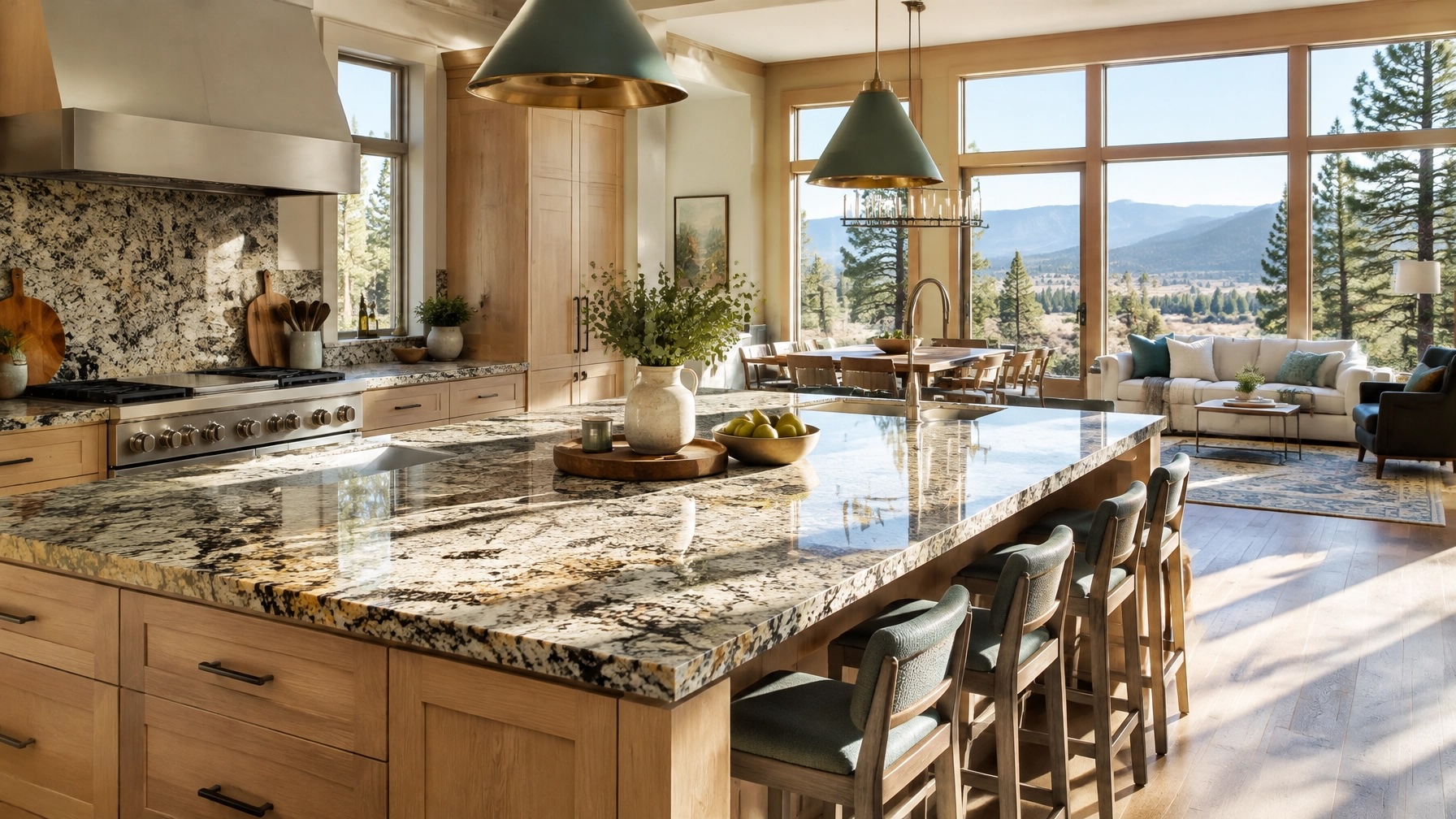
Central Oregon’s bright light is beautiful, but hours of direct sun on a counter are worth planning for when choosing your material.
So, which should you choose?
Quartz may suit you if you want:
- A countertop that usually doesn’t need sealing
- A more consistent color or pattern
- A practical surface for an indoor kitchen
- A style that works with a clean, coordinated design
Imagine Stoneworks’ showroom carries quartz samples from many different manufacturers, and you can browse images of quartz slabs on each manufacturer’s website. Popular quartz makers include Caesarstone, Silestone, Cambria, EleQuence, StratusQuartz, and Daltile ONE Quartz.
Granite may suit you if you want:
- A one-of-a-kind natural pattern
- Greater heat tolerance
- A material that may work better in a sun-exposed area
- The character of a natural stone slab
Many wholesalers inventory a wide range of granite slabs. Two local vendors are Formation in the Old Mill district and EleMar Oregon in Redmond.
Neither option is best for every home. Your cooking habits, sunlight, design priorities, and care preferences all matter. If you’re still weighing the options, explore Imagine Stoneworks’ guides to natural stone, engineered stone, and choosing a material.
Local guidance, from slab selection to installation
At Imagine Stoneworks, we help Central Oregon homeowners compare materials, plan their layouts, and create custom countertops in our Bend shop. Our team handles the process from design and fabrication through professional installation, with details tailored to your kitchen and the way your family uses it.
We can also help you think through slab selection, edges, seams, and care. For more on keeping your chosen surface looking its best, visit our care and maintenance guide.

The right material and edge profile can make an island feel like a natural centerpiece of your kitchen.
Ready to compare options?
A beautiful kitchen starts with choices that feel right for your home, and the people who gather there. If you’re planning a remodel or new build, we’d be happy to help you explore quartz and granite.
Request a quote from Imagine Stoneworks, or visit our showroom at 221 NE Hawthorne Ave. in Bend.